Showing posts with label Vegetarian. Show all posts

Easy No-Cook Summer Tomato Sauce


"No tomatoes were harmed during the production of this sauce."


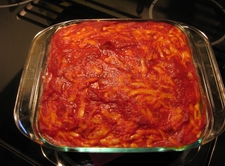
Ahhhh.... it's the summer. Which means heat, humidity, more heat, more humidity, and heat. Who wants to turn the stove on more than necessary, just to make a spaghetti sauce? Well, now you don't have to. You just need access to fresh tomatoes, and a food processor. Choose nice, ripe fresh tomatoes for this one, because you're going to taste it.

Ingredients

tomatoes, as needed (3-5)
herb(s), fresh or dried (ie. basil, chives)
onion, small dice (do not throw in food processor)
garlic, mashed (see instructions here for mashing garlic)
salt, to taste
olive oil, 3-4 T

Directions

Throw the tomatoes in a food processor, along with the mashed/chopped garlic, herbs, salt and olive oil. Process a few seconds, until you have a texture that resembles the above photo. Mix in the onion, and stir your favorite pasta with the sauce.

Done.

Carrot Top Quiche


Ever buy carrots or radishes (or beets), with the tops still on them? And then you throw the leaves out, because you don't have a pet rabbit? Did you know there's tons of nutrients hiding in those leaves? That they're not poisonous? That you can eat them, and have them be good for you? And that they can even taste good, if you know how to make them that way? Yuppers on all of that.

This recipe will show you one delicious way to use your fresh carrots, radishes, beets, etc. to the max, without wasting a bit, and boosting your health to boot. In no way does this quiche taste "healthy", though! Because it's quite delish. Even my four year old grandaughter loved this quiche. And trust me, there ain't nothing and no one pickier in the world than this four year old.

Ingredients

4 eggs
water
1 c flour
salt
sugar
1/4 c good vegetable oil
carrot tops (leaves from one bunch of carrots)
radish leaves (leaves from one or two bunches of radishes or beets, etc)
basil leaves
tomatoes
garlic cloves
paprika
cheese

Pie crust

This one's easy. Mix 1c flour (preferably white pastry) with a pinch of salt and about a teaspoon or two of sugar. Add about 1/4c good quality vegetable or olive oil, mix. Now add just enough cold water to help combine the mixture; only a couple of tablespoons or so. You want a firm and relatively dry mixture, not a mushy wet one. Finally, I like to knead this a bit (inside of a large bowl), ie. a few times, so that it stays together when lining the pie plate.

You can if you wish grease up the pie plate with a tiny bit of oil, but its usually not necessary, given the oil in the crust. You also have the option of rolling the dough out before lining the pie plate with it. But this too is not necessary. You can simply mash the dough against the bottom of the plate (with a closed fist), and smush it out and up the sides. Then finish the crust by pinching around the rim of the pie plate, or flatting it with the tines of a fork. (I prefer the pinch method, as flattening can make the crust difficult to remove from the plate). You can poke holes at the bottom with a small knife or fork if you wish, to prevent air pockets. (If you use organic sifted pastry flour as I did, the dough may be too dense to worry about this).

Cook the pie crust at 375F for about 10-15 minutes, until it is dry. Remove from oven.

Egg Mixture

For the carrot and radish greens, you will need to cook them in advance, to remove bitter flavors.

Carrot Tops: Chop the carrot tops off the carrots, then rinse well (many times) in a bowl/colander of cold water. Finally chop the leaves finely. Chop and mash a large clove of garlic, with salt (see article on how to chop garlic, on this blog). Next, blanche the leaves in a pot of boiling water, with just enough water to cover the leaves by a few centimetres. After the water starts to reduce, add the garlic and a bit of salt and pepper, to taste. Cook until water is nearly evaporated, stirring often.

Radish Leaves: The preparation will be similar to the carrot leaves, but without the blanching stage. n.b. Radish leaves are especially 'sandy', so should be rinsed in several changes of water, ensuring no dirt remains in the bowl of water, when rinsing out. Once rinsed, chop the leaves into pieces, and place the drained but still wet leaves in a heated pan that has olive oil and butter. Fry the leaves on a moderate heat, along with mashed garlic (as described above), adding s&p to taste, until they are cooked down to the consistency of spinach.

Basil leaves: I added some fresh basil to my quiche, as well, to compliment the tomatoes. You only need to rinse and chop the basil, before adding to the egg mixture.

Tomatoes: These just need to be sliced.


Combining the mixture: Beat the 4 eggs in a large bowl until combined, add about 1/4t - 1/2t salt (depending on how much salt you added to the carrot and radish leaves). Add the fresh basil and sauteed carrot and radish leaves (and optionally, add some more salted mashed garlic, as I did). Add a bit of water to bring the liquid mixture to just about or just above 4 cups of liquid (beat the mixture again, after adding the water). Pour the liquid mixture into the pre-baked pie crust, until it is just below the rim. Use a fork to spread the greens around, distributing them evenly. Top with numerous (thin) slices of fresh tomato, until the top is covered with tomato slices. Top that with enough grated cheese to completely cover the top of the quiche (about 1 1/2" from a 400g block of cheese, or 1/2c - 1c). Top that with a generous sprinkling of paprika, across the top of the quiche.

Bake at 375F for about 40 minutes. (Check with a toothpick in the centre, to see if it comes out cleanly).


Végé-pâté Supreme


"It's a cake for vegetarians!"

This is my third végé-pâté (aka "veggie paté") spread recipe. It's the latest and greatest, and the last. Of the three, it is closest to the "Classic Végé-pâté" recipe found on this blog. But it's a bit more ambitious than the other two, so after you've tried the "Classic Végé-pâté" recipe, this is a good one to move on to. Although a bit more laborious, it's an attempt to make a vege-paté of perfect taste and texture. Light, smooth, creamy and flavourful, reminiscent of liver paté, and comparable to store bought versions. It's the one you'll want, if you could only choose one...

Ingredients

    1 1/2 c raw unsalted sunflower seeds, soaked in water
    3/4 c ground flax seed (substitute: whole wheat or spelt flour)
    3/4 c nutritional yeast (I used redstar yeast flakes)
    1/2 t sea salt
    1/2 c vegetable oil (I used cold-pressed sunflower oil)
    1 lemon, juice of
    1 potato, peeled and chopped
    1 large carrot, peeled and chopped
    1 onion, chopped
    1 stalk celery, chopped
    1 clove garlic, peeled and mashed
    1/4 c tamari (substitute: soy sauce)
    1/2 teaspoon dried thyme
    1/2 teaspoon dried basil leaves
    1/2 teaspoon dried sage
    1/2 teaspoon dried savory
    1/2 teaspoon ground black pepper
    1/2 teaspoon ground basil
    1/2 teaspoon oregano
    1/2 teaspoon ground dry mustard (substitute: wet)

Sunflower seed paste
Sunflower seed mixture
(added yeast, spices, etc.)
Instructions:

Soak the sunflower seeds in cold water overnight if possible, otherwise soak for however long possible. Drain and transfer to bowl of a food processor, with a bit of water - enough to make a wet-ish paste when the seeds are chopped up by the processor. Process until you are able to achieve a relatively smooth, creamy, fairly thick paste. 

Végé-pâté mixture
(fully combined, ready 2 bake)
Toss in the nutritional yeast, ground flax seed (you can substitute flour if you don't have or won't get flax), and all the herbs, mustard and salt. Process until these are mixed, then remove the mixture from the bowl. Throw in the chopped onions, garlic and tamari sauce, and process until liquified (add a bit of water if necessary). Throw in the vegetables, oil and lemon juice. Process further until it is all homogenous and liquified; about a minute or so. Combine this vegetable mixture by hand with the sunflower seed mixture you set aside. Mix well until both mixtures are fully combined. The resulting mixture should be wet-ish and fairly thick. If it's overly dry, slowly mix in some water. 

Végé-pâté spread fully baked
Grease a 7" x 11" x 2" baking pan with olive oil. Pour in the combined mixture. Bake at 350F degrees in the middle or high rack of your oven, for about 55 minutes, until top is dry, brown and the edges are dark brown and crispy. Check that a toothpick in the center comes out clean. Let cool, cut in equal pieces and keep in refrigerator.


Bánh mì (Vietnamese Fried Egg Sandwich)


"Eat quick, before more vegetables escape!"

The bánh mì (pronounced "bun me!") sandwich is Viet Nam's answer to the Subway chain. Actually, it dates back to the 40's, and the influence of Viet Nam's French colonialists, among others, is clearly seen in this dish. The sandwich can be found in hawker stalls all over the streets of Viet Nam. It's popularity has seen it spread to Western countries as well, who often don't make it to code. The bánh mì  is normally a meat-filled sandwich, and the meat usually revolves around twenty thousand variations of pork. I'm porky enough as it is, so I'm not about to pork things up any further. This variation, with eggs, would be more considered a breakfast bánh mì. But unless you're planning on plowing the fields yourself because the ox have taken ill, this would be considered a pretty heavy breakfast. I made it for supper, instead.

Another way I did not follow tradition, is by using an Italian ciabatta bread for the base. It is chewy and flavorful, with a soft crust. The opposite of a vietnamese baguette, which is drier and has a thin crispy crust. I did so because it had simple ingredients, without the usual fillers and junk the local French versions carry. To more closely follow the bánh mì, you'll want a nice, large, short, fat, French baguette. Which more closely resembles the Viet Namese baguette. (The viet namese baguette is actually made of a combination of rice and wheat flours, and may or may not be found at asian shops in your area). 


Ingredients

crusty (ie. French) bread (short baguette)
2 eggs
carrots
celery
cucumber
coriander (cilantro), fresh (not chopped)
mayonnaise
salt, pepper

Vinaigrette

soy sauce (or Maggi sauce)
rice vinegar
sesame oil
chili oil

Julienne (or shred) the vegetables. Toss the vegetables in a large bowl, and sprinkle over top with the various vinaigrette ingredients (in the quantities you desire for each ingredient). Mix.  In a non stick pan, fry the eggs sunny side up until they are crisp around the edges (I prefer to turn them over at the end of cooking and fry a minute or two, to set the yolk). (n.b. You can add onions here, if you like. Also, I sprinkled my eggs with a bit of soy sauce and sesame oil). Remove. Cut the baguette in half (ensuring you do not cut too close to the bottom). Spread mayonnaise on the bottom half. Then the vegetables, then eggs, top with cilantro. Season with salt and pepper, if desired.

"Waiter! More napkins please!"
Vary the vegetables, if you like. Green peppers can be added, or more exotic ingredients like daikon or jikama, if you can find it (or store purchased pickled vegetables). The eggs can be scrambled or omelet-style if you prefer.  They can be substituted entirely for fried tofu or seitan. The acid can be red wine vinegar, if you don't have rice vinegar, or prefer otherwise. The soy sauce can be Maggi-brand sauce. I used chili oil, because that's all I had that would work. But the hot stuff can be anything hot (particularly asian) that can be mixed or better still, spread on the bun. Sriracha or garlic-chili sauce would work well, for example. You can also add in some cold rice vermicelli noodles. Finally, you can drizzle the vinaigrette ingredients on the bun directly, as many "banh miers" do, instead of mixing it with the vegetables.

The one thing I would maintain is the coriander. Without the fresh coriander, it's just a submarine sandwich!

Vegan Végé-Pâté


Yes, I have a nice végé-pâté recipe already up. But this one is different. Adapted from a recipe by raw chef Douglas McNish, this is a very tasty vegan alternative to liver paté. As well as to the more common cooked loaf type of vege pate. It's a very basic recipe, requiring few ingredients, no "special" ingredients (ie. nutritional yeast), and absolutely zero cooking time. So you don't even need a stove (but you will need a food processor). You can be relatively flexible too on the ingredients. e.g. Add alfalfa sprouts or spring onions instead of or in addition to the fresh parsley. Or add nuts; ie. almonds or walnuts. Try this spread on fresh pita bread, or use as a stuffing for roasted bell peppers to create a vegetarian supper.

Ingredients

3 cups sunflower seeds
3 ribs of celery, cut in chunks
1 T dill, dried (or 1/4 c fresh)
juice from one lemon
2 T fresh ginger, sliced
3 cloves garlic
2 T tamari sauce (or soya sauce)
1/4 c fresh flat leaf parsley


Instructions

Soak the sunflower seeds in a bowl filled with hot water (about 30 minutes). Meanwhile, add everything to the food processor, except the parsley and sunflower seeds. Process until the vegetables, herbs and spices are finely minced, scraping the sides of the bowl as needed. Add the parsley, and continue to process until finely chopped. Add the sunflower seeds, and process until a smooth paté has formed (close to the consistency of liver paté). This will take at least a few minutes of running time at high speed. Stop the machine occasionally, and scrape the sides of the bowl down with a spatula. Either process in small batches, or try to move the top portion down to the bottom of the bowl, and the bottom up to the top before continuing with the processing, to help ensure the mix is processed evenly. Taste for seasoning when done.

Dal Shorva (Indian Lentil Soup)


Dal Shorva in bone china.

This is a much simpler, down to earth variation of dal (Indian lentil) soup, than featured here. My version of the recipe from Mumtaz Khan, of "Mumtaz Paan House" restaurant, in Bradford, UK. Though simpler, I consider this a more authentic example of dal, taste-wise. I do not include pressure cooker instructions here. I feel that because of the minimal ingredients, for this to be worthwhile, it really requires slow cooking. There's no substitute for developing flavours than time. Apart from not needing to own a pressure cooker, the upside is that you won't have to deal with messy splatters of lentil all over the place, because of the slow pace it cooks at. The downside is that you take all afternoon to cook the soup. So, done properly, this isn't the best choice for a quick meal from scratch, after returning from work. (Though it does freeze wonderfully, and you can heat it up in minutes).

The lentils soften very slowly over a period of hours. Because of that and the absence of vegetables, there is also no need to own a hand blender, as there's no need to liquify the soup at the end of cooking. Most of the lentils will have melted into the liquid, and the few remaining will add body and character. There is also no need to add salt if you use powdered stock, and no need to add fat by way of oil or butter, if you opt out of the "tarka". So it becomes a pretty healthy choice of soup. I've also not included any hot stuff, to keep it down-to-earth. Of course, if you like your dal piquante, there's no shortage of options. Add fresh chopped chilis, chili powder, curry powder, or even a few teaspoons of Moroccan harissa paste. This is pretty much a "recipeless" recipe, as you can play with the spices and the types of lentils or stock, or if you prefer, add additional chopped vegetables or not.

Ingredients

2 cups mixed lentils, split or whole (Substitute: yellow or red split lentils. Green is not ideal)
8 c water (or chicken or vegetable stock)
2 1/2 T (8t) chicken or vegetable bouillon powder (if using plain water)
1 to 2 cloves garlic (or to taste)
1 tsp turmeric
1 tsp cumin powder
1/4 tsp ground cardamom
1 t garam masala
1 t black pepper, ground
1 t salt (unless using prepared powdered stock, which already has salt in it)
a few bay leaves
1 lemon

Tarka Dal (Optional):

1 lg onion, sliced
3 T oil, butter or ghee
1 T mustard or cumin seed

Instructions

Rinse the lentils in cold water, a few washes until the water is clear. Mince the garlic (shown here). In a large stock or soup pot, add the 8c cold water, the lentils, the garlic and all the spices and herbs to be added (**Do not add the masala right away, if opting to add the tarka at the end). Bring to a boil, then reduce the heat to low, and keep the pot covered, while you let the soup simmer. During cooking, the soup should be just barely moving. Very occasionally, you will need to adjust the heat to maintain this very slow simmer, and to stir the pot to keep the lentils from sticking too much to the bottom. Let the soup cook all afternoon, or at least a few hours (about 6 hours should be good). (Tip: You can probably make it in the morning before going to work, leaving it on this very low heat, and it will be ready 8 hours later).

The longer it cooks, the more the flavours develop. Do not allow it to become too thick (e.g. not thick like porridge). Once done, remove the bay leaves before serving. Slice the lemon, and with a knife, cut away the peel and pith from the slices, leaving only the flesh. Place the lemon slices in the soup bowls, before pouring the soup. Serve the dal with bread and fresh vegetables.

Tarka Dal: Optionally, you can add a "tarka" to the dal at the end of cooking, to enhance flavours. This is done by frying about a tablespoon of mustard or cumin seed in a pan in about three tablespoons of olive oil, butter or ghee on medium heat, until they start to pop and/or become fragrant. Then add sliced onion and fry until softened and translucent (but not browned). Then add the garam masala, fry for one minute, and transfer the mix to the dal soup pot. (Add some dal to the frying pan to ensure all the oil has been transferred). Simmer for a few minutes longer.

Classic Tofu Sandwich Spread


As a companion piece to the végé-paté recipe, I am adding another sandwich spread and vegetarian staple. It is the vegetarian's answer to egg salad sandwiches. Make this dish often, as it is so versatile, easy, quick, low fat and nutritious. Particularly suitable for work lunches, it's also ideal for summer picnics or even kid's lunches. It can be served on bread or as a dip for vegetables. It can be made with almost any block of firm or extra-firm tofu; hand-cut, packaged, flavoured, plain. (A weight of 350g to 1lb. is about right). You are by no means not restricted to the vegetables I list here either. You can substitute for other light summer-y vegetables, that are easy to shred. If you're feeling adventurous, why not add a quarter cup of cooked cracked wheat for extra oomph.

Ingredients

1 lb. tofu
1/4 - 1/3 c mayonnaise and/or Miracle Whip
1 T dijon mustard
1/8 tsp. pepper
1/4t - 1/2t salt (optional, as the condiments already have salt)
1 - 2 T lemon juice
1 - 1 1/2 t dried herbs (your choice or combination: dill, thyme, parsley, etc.)
1 celery
1 carrot
2 spring (green) onions
2 radishes (optional)
1/3 c grated Parmesan cheese (optional)

Instructions

In a small pot, boil the tofu block in water for one minute. Drain, squeeze out excess moisture in a napkin or towel. Set aside. In a food processor, add the vegetables (cut in small chunks), and process until they are finely minced (alternatively; you can use your processor's shredding disc to shred them). Add in the tofu, broken in large chunks. Add the rest of the ingredients. Process until ultra smooth. The consistency desired is something that holds together well (ie. a dense mousse), but not dry, crumbly or grainy. If this is the case, you can add more liquid. Either a few tablespoons of good quality vegetable oil (though this will add unnecessary fat/calories), or water. Or both. If adding water, add carefully, a bit at a time, to avoid making the mixture too wet. (n.b. Remember you can always add liquids if too dry, but can't take liquid away). Allow the processor to run long enough to incorporate the liquids, before adding more. Taste for seasoning/flavour, adjust if necessary.


Classic Végé-pâté


No geese were harmed
during the production of this
vege-pâté.
The idea behind végé-paté, as in many vegetarian dishes, is to mimick a popular meat-based favorite. In this case, liver pâté sandwich spread. Which it does rather nicely, without breaking up families of geese or duck in order to snatch their livers. Végé-pâté may not be a complete protein source, but it is healthy and low-fat, with the rare benefit of nutritional yeast. It is excellent on French baguette, or when spread out on a "wrap" type sandwich (soft thin tortilla), adding such as lettuce, alfalfa sprouts, tomatoes, cucumbers, sweet onion, etc. It can be a light supper, as easily as it can be lunch. Take it with you to work, it's miles beyond food court food.

Ingredients

1 c unsalted sunflower seeds
1/2 c olive oil, (preferably extra virgin)
1/2 c whole wheat flour
1/2 c nutritional yeast (preferably torula yeast)
juice of 1/2 lemon
1 med to large (or 2 small) potato (or 1 sweet potato), peeled and chopped
1 large carrot, peeled (if not organic) and diced
1 onion, chopped (Optional: and/or 2-3 spring onions, sliced)
1 stalk celery, chopped
1 lg. clove garlic, peeled
1/4 c light soy sauce (preferably Bragg's) (Optional. I usually prefer without the soya sauce)


Spices

1/2 t (each) of any/all of the following dried herbs: thyme, savory, dill, basil, sage
1 t fines herbes (optional)
1/2 t salt
1/2 t ground black pepper
1/2 t ground dry mustard (Substitution: 1 t regular mustard)


Instructions

Lightly grease an 8x8 inch baking dish with a bit of the olive oil. Mince the garlic with the flat blade of a knife as demonstrated here. Throw the garlic, onions and/or spring onions into the food processor, blend until finely shredded. Then add the carrots and repeat. Then the potato (repeat). Then the celery. And finally the sunflower seeds. Continue to process until the mix is finely minced. Add the flour, yeast, lemon juice, mustard, salt (unless using soy sauce), herbs and spices. Process for a couple of minutes until everything is smooth and homogenized. The mix should be about the consistency of cake batter. If the mix is too dry, add water, 1/4c at a time, until it forms a heavy liquid batter, and pours slowly (when falling off a spoon). Be careful not to make the mix too wet with liquid. Pour into an 8" x 8" pyrex dish (or metal), bake for 1 hour @ 350F degrees, until lightly browned. Cut into squares.

(Optional: Cover the dish with the vege-paté tightly with aluminum foil, and place it into a larger dish, partially filled with water. Replenish water as needed, if it dries out during cooking. Remove foil cover during the last 15 minutes of  baking). 

Easy Polenta Cake


Polenta appears to be somewhat under-appreciated outside of Northern Italy. Where it is more beloved than Italy's famous affinity with pasta. It is the European cousin to southern America's "hominy grits", but for Italy, may pre-date pasta, pizza and even yeast bread. In fact, in an earlier form, it was consumed by the Roman army during Roman times. At its heart, polenta is good, honest peasant food, and was a staple for centuries among Italy's peasantry. Where they traditionally made it in a copper cauldron, burning over a wood fire, and stirring the polenta with a thick wooden stick (as many still do). Now that's rustic!

Fortunately, at The Recipeless Cook, you don't have to slave over a hot cauldron, stirring like a mad witch for 60 minutes straight. With modern methods in your employ, you can have a delicious polenta meal in... oh about 12 minutes with... just about no stirring. Sound interesting? Well read on!


Ingredients

1 cup coarse yellow cornmeal (aka "corn grits" aka "polenta")
3 to 4 cups water (or chicken stock, or milk)
1/3 to 1/2 lb. grated cheese (and / or powdered cheese)
500 ml. approx tomato-based pasta (aka "spaghetti") sauce, or tomato sauce
Vegetables (or meat) of your choice
Salt
White pepper (optional)

Instructions

Making the Filling 

Bottom layer of polenta,
second layer tomato sauce
third (top) layer vegetables
This dish is a simple layered polenta, with a filling of vegetables (or even meat, if you wish). The idea is to sauté the vegetables seperately, then layer them in the dish. Traditionally, with polenta you might marry it with steamed spinach, kale, fresh basil or other greens, tomatoes, zucchini, asparagus, mushrooms or other typical "summer" vegetables. But I say throw in whatever vegetables you have or desire (other than potatoes or similar root vegetables, which don't combine well with cornmeal). I happened to have brocolli, carrots, and green bell pepper on hand; so I used that.

Start by sauteeing chopped onion in a pan on med, in a bit of olive oil. When softening, turn to med-low. Add garlic, soften. Add your desired vegetables (either one at a time, so as not to overcrowd the pan, or all at once, if you plan on steaming them somewhat). Cook until vegetables are tender-crisp (brightly coloured), or to your desired consistency.

Cooking the Polenta

Top layer of polenta after spreading out
Polenta poured over top
of vegetables
I offer several ways to cook polenta, because variety is the spice of life, after all. The microwave method, which I admit is new for me, is a good compromise between less work and decent texture. It is the "easy" in the title "Easy Polenta Cake". The stovetop pot method is closer to a traditional way of making it, and may provide better results. I believe all methods create somewhat different results, and whichever you choose, depends on what your priorities are. (n.b. For added flavour, you can substitute chicken broth for water (omitting the additional salt), or milk, or cream, or add white pepper. At the end of cooking, you can also if desired, add a bit of butter, or grated or powdered cheese (ie. romano, pecarino, parmesan).


Conventional pot: 

Easy (nearly no-stir) method: In a med saucepan, boil 4 cups of water and a teaspoon of salt (always add salt to a pot after water is boiling). Then slowly whisk in 1 cup of polenta (cornmeal), with a whisk or wooden spoon. Turn heat to low or med-low (depending on your stovetop), and simmer covered. Stir with a wooden spoon every ten minutes or so, for about a minute, until the polenta is stiff enough to hold the spoon upright (about 45 minutes).

Traditional method: In a med saucepan, boil 4 cups of water and a teaspoon of salt (always add salt to a pot after water is boiling). Then slowly whisk in 1 cup of polenta (cornmeal), with a whisk or wooden spoon. Lower the heat to medium and cook, stirring frequently, for about 10 minutes. Polenta is done when the texture is smooth and can hold a spoon upright. If not fully cooked, add additional water and continue to cook.

Microwave:

Cornmeal polenta,
after cooking using
microwave method
In a microwave safe bowl, add 3 1/2 cups of water with 1 cup of cornmeal, and a teaspoon of salt. Microwave on high for six minutes. Stir, microwave for another 6 to 10 minutes, until the polenta is thick enough to hold a fork upright.

Pressure cooker:

You can also cook polenta in a pressure cooker, if you don't have a microwave oven. You won't save time, but like with the microwave, there's little work involved (though more work cleaning up, later). Boil 4 cups of water in the cooker (with the lid off), stir in 1 cup of polenta (cornmeal) with 1 teaspoon of salt. (Pour in a little at a time, stirring in one direction only). Lock the lid in place, and bring the cooker to pressure. Reduce heat to med-low, cook 5 minutes, remove from heat and allow the pot to de-pressurize by itself (5 to 10 min.).  

n.b. Note that  you should proceed to the next and final step very quickly after the polenta is cooked, because it hardens quickly.


Baking the Polenta

Completed dish
with cheese and tomato sauce
Oil an 8" or 9" square glass (or metal) baking dish with olive oil. Pour in about half of the polenta into the bottom of the baking dish, and mash down with the back of a spoon to spread it evenly across the bottom. Pour in enough spaghetti or tomato sauce to cover the bottom, and spread evently. Pour in your vegetable mixture and spread evenly. Pour in the remaining polenta, patting it down with the back of the spoon, to spread evenly over the vegetables. Decide whether you want to add the cheese next, or the sauce, and then the cheese (according to your preference). If cheese goes next, drop 1/3 to 1/2 pound of grated cheese (e.g. mozarella) in the centre, and spread it out evenly over the surface. Pour on enough tomato sauce to cover the top.

The magic of Chef Boy Hardy
Bake in a 350F degree oven for 15-30 minutes, until the cheese is melted, the sauce is bubbling, and the polenta fairly solid. Cut into squares or rectangles to serve.


Bengaloo Chick Pea Curry


Here is an Indian approach to chick peas that really elevates the humble bean to lofty heights. It is typical of Northern fare enjoyed by the Hindu population. Do not be threatened by the amount of ingredients. The recipe is not complex, and leaves much room for variation. Just about all of the ingredients can be maintained as pantry staples. Particularly the Indian spices, if you keep them on hand for such recipes. Which makes this chick pea curry something that you can make just about any time, and in little time (if you opt for canned chick peas).

Ingredients

2 t oil (or "ghee", a clarified butter)
1 onion, chopped
4 cl garlic, minced
1 t tomato paste
1 can chick peas (15oz) (or: 3/4 dried chick peas, cooked), drained, reserve 3T liquid
1 to 2 T lemon juice

Spices

1 t curry powder
1 to 2 t salt
1 t black pepper
1/2 t crushed red pepper (or to taste)
1 t margarine or butter
1 t chili powder
1 t salt
1 t turmeric
1 t paprika
1 t cumin
1 t coriander powder
1 t garam masala powdered spice mix

Instructions

Heat the oil (or ghee) on med-high. Fry the onions until slightly browned. Reduce heat to medium, add garlic, curry powder and tomato paste. Stir, and simmer for 2 minutes. Add chick peas, reserved liquid, lemon juice, salt, pepper and the remaining spices. Simmer 5-6 minutes, stirring occasoinally. Add red peppper flakes, margarine or butter, and stir to melt. Stir, simmering for 5 minutes, or until chick peas are softened and the dish is hot.

Serving 

Serve on rice, and/or with bread and salad.


"When your candles are burning low
 strike a match, and curse the darkness!"


- "Vibrator"
: Sananda Maitreya

Aloo Pie (Carribean Garlic Mashed Potato Patty)


There's a Carribean joint in my area that makes some glorious home-made fast food, derived from their roots in Trinidad. I usually have what's called "doubles" (a soft-shelled curry-fied twist on the more popular Jamaican patty; though much superior to it), and this recipe; "aloo pie". "Aloo" comes from the Indian word for "potato". What makes their mashed potato and garlic snack so delicious, is the hot sauce they use to season it. It has a banana-y overtones along with the hot pepper flavour.

I hunted it down, and I believe I found it, or very similar in a bottle of red Jamaican Hot Pepper sauce under the "Grace" brand. It doesn't specify, but I'm guessing by the picture on the label, they use scotch bonnet peppers. (That's common in Jamaican hot pepper sauce). So now it's about time to make aloo pie! Serve this with a salad, or an Island-style meat or vegetable curry, and you're laughing.


Ingredients

Filling

4 large potatoes
3 T olive oil
vegetable or peanut oil for frying
1/4 onion, thin slice
1/2 teaspoon salt
1 t cumin (optional)
2 - 4 cloves garlic
1 to 2 t Jamaican/Carribean hot pepper sauce* (or 1 green hot pepper, minced)

Patty

2 cups all-purpose flour
2 teaspoons baking powder
2 t turmeric
1/2 teaspoon salt
3/4 cups water


Instructions

Filling

Peel, wash and slice potatoes in halves. Place in a sizeable pot, and cover with water. Boil and cook until tender (slip a sharp paring knife in the centre, to see if it slides fairly easily). (You can prepare the patty dough while its cooking). Next, mince and mash the garlic with salt (as I describe in this recipe) to form a paste. Place it in a small bowl and mix well with the hot pepper sauce, plus 1/4t salt (Optional: Add the cumin powder). When potatoes are cooked, drain and mix with the crushed garlic paste mix, until smooth and free of lumps. Taste for seasoning. Top with the onion slices. On med low, heat olive oil in a small skillet or pot until just below the smoking point, and pour directly over the onion slices and the potato underneath. Mix well.

Patty

Mix the flour, baking powder, salt and turmeric. Add water and knead gently and briefly. Place the dough in a bowl, partially covered with a dish or fully covered with a wet cloth; and leave it to relax while you prepare the filling. Form the dough into nine balls, and flatten with palm. Using a rolling pin, flatten the balls into approx. 4" - 6" circles on a floured surface, and fill with a tablespoon or so of filling. (n.b. Floured surface should not normally be necessary, unless you added too much water. Normal dough should not be sticky or stick to the surface of the prep board, and have a little elasticity. It is best to risk having the mix too dry then too wet. If too dry, chill in fridge along with the filling, while you prepare the rest. If too wet, mix in a bit more flour, with minimal kneading). Spoon filling along one half, leaving room at the edges. Then fold over the half without filling, and pinch the edges closed to form a half moon shape, creating ridges with your fingers.


Then flatten the top of the patty with your palm to spread out the filling, and create a flatter, more uniform shape. Carefully remove it from the prep board and place it in a skillet (preferably non stick) on med.high heat, to which a few tablespoons of vegetable or peanut oil (with a relatively high smoking point) has been added. (The patties do not have to be fully immersed in the oil, just their surface). Add 2 or 3 patties to the skillet (depending on its size), and cook each side until golden brown. Remove immediately when browned, and drain on paper towels and/or a cooling rack.

p.s. Avoid eating more than two of these in a day! They're loaded with oil, so, not heart healthy.


* (n.b. The hot pepper sauce is hot by itself, but much more mild when mixed in well with the potatoes. I don't find it particularly hot with even 2 teaspoons).  

Asheh Reshteh (Persian Spinach & Noodle Soup)


In Iran, Persian carpets are so cheap and  plentiful,
they use them as disposable tablecloths.
As an accompaniment to the Persian kabobs and rice, I include this recipe for Persian noodle soup. Having tried this at several Iranian restaurants, it is truly exquisite, and equally wholesome and nutritious. Though it's not a particularly easy recipe, and you will probably have to go out of your way to get some of the ingredients, it makes a perfect accompaniment to a special Persian meal. It also makes a very good soup for cold weather.

"Ashesh Reshteh" is considered "Persian Ash", which is a type of thick soup. Ash can contain many ingredients, from vegetables to meat, and if hearty enough, can become the meal. e.g. "Ash Reshteh" would be a variation with noodles, "Ash-e anar" contains pomegranate juice and split peas, and there are many other variations.

Ingredients

2 onions, large, thin slice (length wise)
6-8 cloves garlic, minced
1/3 c dried chickpeas (optional: or 1 can)
1/3 c dried red beans
1/2 c dried lentils
2 t turmeric
1 to 2 bags spinach
60g (2 oz) flat noodles (fettucini or iranian "reshteh" noodles. can use angel hair pasta or the fine egg noodles found in middle eastern grocer)
1 T flour

Garnish

1 onion, thinly sliced
2 T dried mint
sour cream  (or yogurt)


Instructions

For the legumes, you can use either 1 can of drained & rinsed beans, or 2/3 cup of dried beans (chickpeas are mandatory, and in addition, red beans or pinto may be added). If using dried, soak beans for a few hours in water, then drain and rinse. In a large soup pot (preferably enamelled cast iron), soften the onions and garlic in olive oil on med heat, until translucent. Add the soaked (or canned) chickpeas, red beans, and turmeric. Cook, stirring for a few minutes. Add 8 cups of cold water. Season with salt, and simmer covered for 1 hour to cook the beans (not necessary if using canned). Add the spinach, noodles (approx 3" segments) and dried lentils to the pot. Gently simmer the soup for one half hour, stirring occasionally. (Optional: If you wish, you can also add chopped fresh herbs, ie. coriander, parsley, mint (about 2-3 cups) and/or chopped leeks (about 1 cup)).

In a small bowl, mix the tablespoon of flour with 3T of the soup stock until smooth, add to the soup to thicken (soup should be thick). Gently simmer one half hour longer (or longer if desired), stirring occasionally to prevent scorching on the pot.  (n.b. Soup may be served later or the next day, to allow flavors to develop).

Garnish

While the soup is cooking, in a separate skillet, sweat the onion in olive oil (sauté on med. until translucent). Then lower the heat and cook until browned and caramelized. Add dried mint near the end of the cooking. Then, when plating the soup in bowls, add this as a garnish in the centre of the finished soup, along with a drizzle of sour cream (often done in a cross or "x" pattern across the soup). (Optional: You can also add in chopped spring onions or fresh chives. Some variations even include small meatballs).


Yields: 6

Russian Carrot Pie


If Bugs Bunny made pumpkin pie...
This is a family recipe I've eaten a few times, and I never grow tired of it. Everyone I know who's ever tried it loves it as well. If recipes were gold, this one would be worth a fortune. Add a salad on the side, some bread and cheese, a glass of wine perhaps, and you've got a great, low fat healthy summer or winter meal. One that can be made anytime, with relatively little effort, and time. And that's despite the fact that you'll be making the pie shell from scratch! Just stick around a few, I'll show you how to do that.....


Ingredients

1 container cottage cheese
3/4 c cheddar cheese, shredded
2 onions, chopped
2 T butter
2 lb. carrots, grated
1 T flour
1 c flour (for pie shell)
1 egg
1 T dill, dried (or 3T fresh)
salt & pepper (ie. 1/4t - 1/2t)
1/4 c vegetable oil
1/4 c very cold water

Instructions

Pie shell

To a 9" glass Pyrex pie plate, add the 1c flour. Make a hole in the middle with a large spoon. Pour the oil and (very cold) water together into a container with a tight lid, and shake vigorously to mix them together. Then pour this mix into the hole in the flour on the pie plate. Using the spoon, carefully mix the liquid and flour together, until they form a dough. Then with the back of the spoon, press the dough into the pie plate, until it forms a cohesive shell. (You can use your fingers to pinch along the outer rim of the pie dough, to both create a knurled effect, and cover the side of the pie plate with dough). Your pie dough is now ready for filling.

Filling

Grate the carrots. In a separate bowl, beat the egg, then add the cottage cheese, dill, shredded cheese, and salt and pepper to taste (but don't taste it.... there's raw egg in there!). Melt the butter on med. low (do not let burn) and sauté the onions in that, until they are translucent, but not browned. Add the grated carrots, stir, and cook 5-10 minutes on low, until reduced. Add the flour to this mix and cook, stirring, for a minute or so longer. Remove from heat and transfer the carrot mixture over the bowl containing the cottage cheese/egg mixture; combine well. Carefully pour this into the pie shell, bake at 350F for 30 - 35min. until the filling is set, and the shell is light golden brown. Remove, let cool before slicing.

Quick Vegetarian TVP Chili


Winner of the Brokeback Mountain
Chili Cook-off Festival
This will probably not win the "Waco, Texas Big Ol' Barby-cue n' Chili Bakeoff" competition. But I guarantee no animals will be harmed during the production of this chili. It's a compliment to the Nutrela stew found elsewhere on The Recipeless Cook, where you can read about TVP in more detail. The notable difference, is this recipe uses a smaller form of TVP, "TVP granules". Which can be found in health food stores, or the health food aisle of your grocery store. They're even sold in organic version (which is wise, because soybeans today are usually from genetically-modified crops). Once cooked, the granules are  intended to resemble ground beef. They do a fine job of adding taste and texture to this chili. Without the added fat or hormones etc. added to the beef.

The beauty of this chili, is not just that it tastes delicious, or that it's healthier than traditional recipes, or low in cost, but that it can be a relied on as a last-minute supper idea. When you don't even have the time to think of supper ideas. So long as you keep beans and TVP in the pantry, you've got three-quarters of the ingredients here ready made. The rest is a few quick chops, and in the pot it goes. Let it simmer while you take a shower or watch the news, and you're done, in lickety-split time. It's a good choice for a family or pot-luck dinner, and don't be surprised if your carnivorous guests think there's meat in it! (Just tell 'em it's snake meat, they'll like that... And if they figure out it's some kind of veggietarian thing, tell them you were mentally putting quotes around the term "snake meat").

Substitutions: To season, you can use some or all of the spices suggested, or your favorite chili spices. Eliminate the cayenne and red pepper flakes if you don't like heat. Substitute spaghetti or tomato sauce if you prefer (but try the soup!). Use a smaller (19oz) can of kidney beans and another 19oz can of pinto beans, if you like. Or use vegetable broth instead of water. And if you really can't find TVP granules in your area.... try harder. But if you still can't find TVP.... you haven't tried hard enough. However, if you've tried harder and tried again and still can't find the TVP, and the closest you've come is finding a package of "Tony's Veal Parmesan"... ok, then try tofu.

Ingredients

1 large can (28 oz) kidney beans, drained & rinsed
1 reg. can (19 oz) tomato soup (ie. Campbell's)
1 onion, large, chopped
1 celery, diced
1 bell pepper (ie. red), small but chunky dice
1 carrot, small dice
2-3 garlic cloves, cut how you like
olive / vegetable oil
1/2 cup TVP (aka "Nutrela", aka "Soy Protein"), granule size

Spices

1 T mexican chili powder
1 t paprika
1 t ground cumin
1 t ground coriander
1 pinch cayenne pepper
1/4-1/2t red pepper flakes
1 t Worcestershire sauce
1 t Lemon juice (opt)
bay leaves
1/2 t salt
1/2 t pepper

Instructions

TVP

Place the TVP granules in a sauce pot with plenty of water to cover. Simmer for 5 min., drain, rinse.

Chili

In a medium or large pot on med-low heat, sweat the onions, carrot, bell pepper and celery in 1 or 2T oil (sauté onions until soft and transparent, but do not let brown). Add all the dry spices (except the bay leaf/leaves). Cook, stirring for one minute. Add the beans, along with the can of tomato soup and 1 1/2 cups of water, and finally the bay leaf/leaves. Simmer for 30 min, or until the flavors develop, and it reaches a nice chili consistency. Ten minutes before the chili is done, add in the TVP granules, worcestershire sauce and lemon juice (if using), let simmer for 10 min.


"I learned to drive on those East Texas red clay backroads
And I mean to tell you my friends
They were no easy roads
You had to watch out for all the curves
Down by Kelsey creek
And detour through the Lindsay's pasture
When the water ran too deep "

- "Memories of East Texas"
: Michelle Shocked


White Spaghetti


Even I can't
resist this
spaghetti, blah!
This is a favorite recipe we often make. It's a French Quebecois family favourite, and it's one of the best ways to make pasta, in my humble opinion. It is as simple as it is delicious. It's also a boon for garlic lovers, as it uses a generous quantity of fresh, raw garlic. Garlic has many health benefits, including being a natural anti-biotic. It can help fight colds and flu, reduce acne, lower high cholesterol, keep both mosquitoes and vampires away, and prevent you from getting a case of The Plague. (Look at me, I've been Plague-free for three years). If you can get your hands on organic garlic, mmmm-mm, you've got a winner.


Instructions

Spaghetti:

Cook about 375g (3/4 lb) of spaghetti until al dente (slightly firm to the bite).

Sauce:

2 c milk
8-9 cloves garlic
1 lb. mozarella cheese (can sub cheddar, etc).

Finely mince the cloves of garlice (you can use a garlic press for this, or see instructions on the classic manual method). Place a medium sauce pan on med-low heat, add the milk, crushed, minced garlic, and cheese. Heat to melt the cheese. Place cooked spaghetti in an oven-safe glass or ceramic casserole dish, and mix in the sauce. Bake at 350F for 30 minutes, until the cheese is all melty and bubbly, and the top layer of pasta is crisp and has taken on color (brown is good, bits of black is ok).


Yield: 2

Moroccan Couscous


Little known fact: couscous originated
with a 5 year old named "Billy"
after playing with his vegetables.
Couscous (which is basically tiny pasta), is often associated with Morocco, but is a staple in North and West Africa, and is eaten in numerous parts of the world. There are different varieties of couscous as well. The most popular variety is Moroccan couscous, who's grains are about the size of cornmeal. But Israel for example, is known for its own variation, which has larger grains, about the size of peppercorns. Lebanese couscous has even larger grains, about the size of small peas. In Morocco, the couscous is steamed, and takes a while to cook. But you can now get quick-cooking couscous, that while it may not compare to the more traditional methods, is still good and a breeze to make.

Although there are traditional ingredients associated with couscous, in the ways of The Recipeless Cook, it is best to think of the couscous as the canvas, upon which you draw a meal. The paint in this case, would be the vegetables (or meat) you add to the canvas. The vegetables can be almost anything you have on hand, that needs to be eaten - though couscous recipes traditionally favour winter vegetables. Couscous also often contains dried fruits, which make a delicious contrast to the vegetables. The basic idea behind a couscous meal is simple. Cook the vegetables, as you would a stew (preferably in a stock, in order to have some sauce at the end), then cook the couscous separately, then marry the two together.

In true Recipeless fashion, I've refrained from listing quantities of things, so that you decide what and how much to use, and make it your own. Consider about a quantity of one for each vegetable, and you might try including 3 - 6 different vegetables. (If you've made too much, you can always freeze them, and use them another day for another couscous). The vegetables should be cut chunky size (for taste and tradition), but they can also be halved, and cut in long (ie. 3") lengths.

Ingredients

Vegetable Suggestions: Potato, sweet potato, rutabaga, pumpkin, onion, zucchini, bell peppers, carrot, celery, green beans (cut), squash, yams, bitter melon, etc.

Legume Suggestions: Chick peas, fava beans, kidney beans (large), black beans

Meat Suggestions: Beef, chicken, lamb

Spice suggestions: Cumin, ginger (powder or fresh), fresh garlic, paprika, cayenne pepper, cinammon, nutmeg, salt, harissa (sparingly! the stuff is hot!)

Fruit & Nut suggestions: Pine nuts, walnuts, almonds, raisins, dates, dried apricot, dried fig, lemon slices


Instructions

Simple instructions:

Cook the vegetables (and fruit if using) in chicken, beef or vegetable stock, until fork tender. Cook legumes (if using) and add to vegetables. Cook couscous. Pour vegetables/fruit/legumes over a plate of couscous.


Detailed instructions:

Couscous:

In a sauce pan, pour in one part couscous with one equal part of water. (Optionally: Add 1/2t salt. You can also substitute stock for the water, or otherwise flavor the water). Bring to a boil. When it begins to boil, turn off the heat. Cover and let the couscous sit for about 5-15 minutes. Remove lid, fluff the couscous with a fork. The grains should be light and fluffy.

Conventional pot:

Sauté the aromatic vegetables (ie. onion, garlic, bell peppers) in olive oil for a few minutes. Add the harder vegetables (ie. carrots, celery, potatoes, etc) or meat, and add the water (or flavored stock) and spices, if using. Add the legumes (beans), if using, a little after this (as they should already be precooked). Simmer covered for a few minutes until the vegetables (and/or meat) are fork tender. (The beans should be soft, but not falling apart). Plate the couscous and pour the vegetable mixture over top.

Pressure cooker:

In the pressure cooker, add the vegetables, spices, meat, oil (everything but the couscous), and about 2 cups of water. (Alternatively: First lightly brown the onions and garlic in the olive oil, with the lid of the pressure cooker off. Then add the rest of the ingredients to the cooker). Close and lock the lid. Bring cooker up to pressure on high heat, reduce heat just enough to maintain pressure (low or med low) and pressure cook for 3 minutes. Pour your couscous mixture (ie. beans and vegetables) over the couscous and serve hot.

Alternatively: You can cook the couscous in the pressure cooker, and save on clean up. Once the couscous mixture is done, depressurize the cooker, add the uncooked couscous, stir, replace the lid, lock it and cook for another 3 minutes. Then depressurize the pot again, check the couscous for seasoning. (You can add butter, olive oil or harissa at this point, if you wish). Be careful about the timing, because it's very easy to overcook the couscous with this method. (If the couscous does become too soft and gummy, let the whole couscous dish dry out a bit on low heat, with the cooker uncovered).

 
The Recipeless Cook © 2008 | Créditos: Templates Novo Blogger